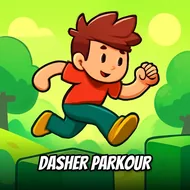
Dasher Parkour
Instructions:
Simple gameplay with efficient and easy to learn controlsDescription
Dasher Parkour: A Beginner's Guide
First time sprinting across rooftops in this thing? Don't sweat it too much. The whole point of Dasher Parkour is momentum, so your first few runs should really just be about getting a feel for timing rather than chasing a perfect score. Crash into a wall, fine, that's part of the learning curve. Most people bail on their first attempt because they treat it like a normal runner and forget that vaults and rolls actually need a bit of setup before the jump itself. Slow down mentally even while your character speeds up physically, and things click faster than you'd expect.
Controller & Keyboard Guide
- Movement keys shift your runner left and right between lanes and ledges.
- A dedicated jump input handles gaps, rails, and rooftop hops.
- Sliding lets you duck under low obstacles without losing your stride.
- Holding certain directions mid-air can adjust your landing angle.
- Controls stay minimal on purpose, so muscle memory builds within a few tries.
Winning Strategies
Chaining moves matters more than hitting any single trick perfectly, so think in sequences instead of isolated jumps. Watch the obstacle a beat before it arrives instead of reacting the instant it's under your feet, because this game punishes late inputs harder than early ones. Roof gaps especially reward a slight run-up in your head, that half-second where you commit to the jump rather than hesitate at the edge. When things get chaotic, resist the urge to mash every button; a clean single input almost always beats panicked spam. Fast reflexes help, sure, but pattern recognition is what actually separates a decent run from a great one, since a lot of these obstacle clusters repeat with small variations. Once you notice the rhythm, sliding and vaulting start to feel almost automatic. Losing a run isn't a big deal here either, restarts are quick, so treat every crash as free information about the next stretch of track. Stack that knowledge run after run and the whole course starts to feel shorter, tighter, and honestly a lot more fun to blast through.